

Categories
Buyers, SellersPublished May 31, 2026
The Truth About Buying a Home Without a Real Estate Agent in 2026

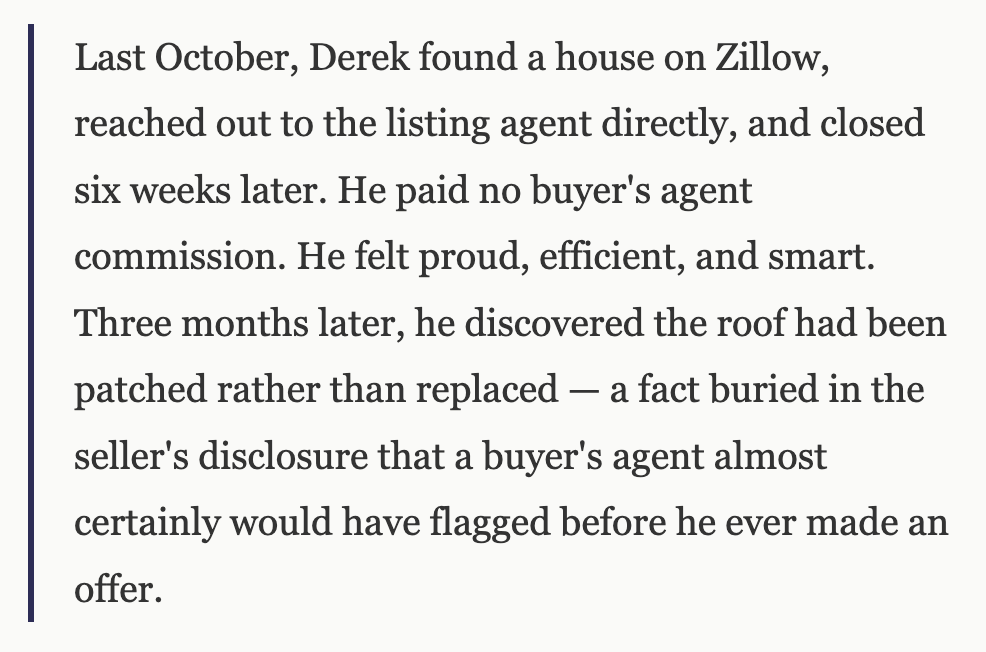
Derek isn't a cautionary tale. He's a common one. And in 2026, as commission structures shift and listing platforms make it easier than ever to find homes without professional help, more buyers are walking into transactions with his confidence and his blind spots.
This is not a piece designed to scare you back into using an agent you don't need. It is a piece designed to help you understand what you're actually taking on — so that if you go it alone, you do it with eyes open.
Why more buyers are going it alone in 2026
The shift began in 2024, when a landmark legal settlement with the National Association of Realtors changed how buyer's agent commissions are disclosed and negotiated. Before the settlement, sellers almost universally paid both their own agent and the buyer's agent — typically a combined 5–6% of the sale price — and buyers rarely saw or thought about that cost. After the settlement, buyers are now asked to sign a representation agreement that spells out exactly what their agent would be paid and who pays it.
That transparency created a new question in a lot of buyers' minds: Do I actually need this?
That question is fair. Zillow, Redfin, and Opendoor have made browsing inventory feel effortless. You can tour homes, review disclosures, and compare neighborhoods without ever speaking to an agent. A generation of buyers who have grown accustomed to doing their own research — on everything from car purchases to medical diagnoses — has arrived at the housing market with the same instinct: I can figure this out myself.
In some cases, they're right. But in more cases than the platforms would have you believe, the part that's hard to figure out isn't finding the home. It's everything that happens after.
What a buyer's agent actually does — and most buyers don't know
Ask most people what a buyer's agent does and they'll say: show you houses. That's the visible part. The invisible part is where the value actually lives.
A good buyer's agent pulls comparable sales — not the Zestimate, but actual recent closed transactions in the specific neighborhood, adjusted for condition, lot size, and timing — and tells you whether the list price is honest or aspirational. In a market where sellers still test high prices, that analysis alone can save you tens of thousands of dollars.
They write and structure your offer. This isn't just filling in a price. Contingency language, inspection timelines, escalation clauses, earnest money terms, possession dates — every element either protects you or exposes you, and the difference between a well-written offer and a sloppy one can determine whether you get the house and whether you're protected if something goes wrong.
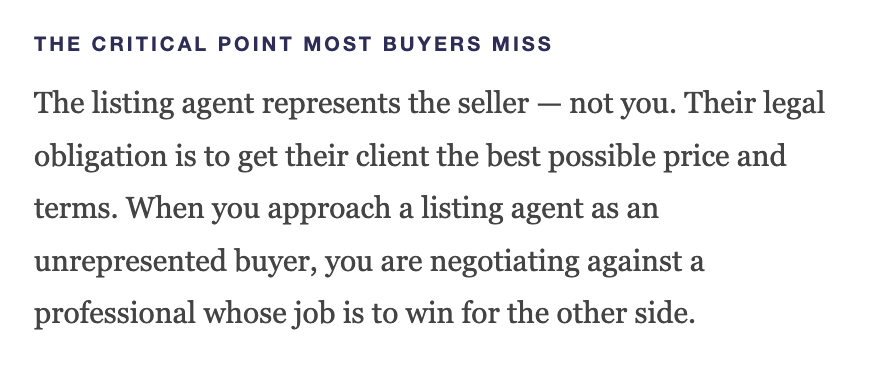
A buyer's agent also coordinates the full transaction: scheduling inspections, reviewing reports, negotiating repairs, pushing back on appraisal gaps, keeping lenders and title companies on timeline, and catching the administrative errors that quietly derail closings. Most buyers have never seen this process from the inside. That's precisely why they underestimate it.
The real financial math
Post-settlement, buyer's agent commission is negotiable — typically 2–3% of the purchase price, now paid directly by the buyer or structured as a seller concession in the contract. On a $400,000 home, that's $8,000–$12,000. That's real money, and it's reasonable to ask whether it's worth it.
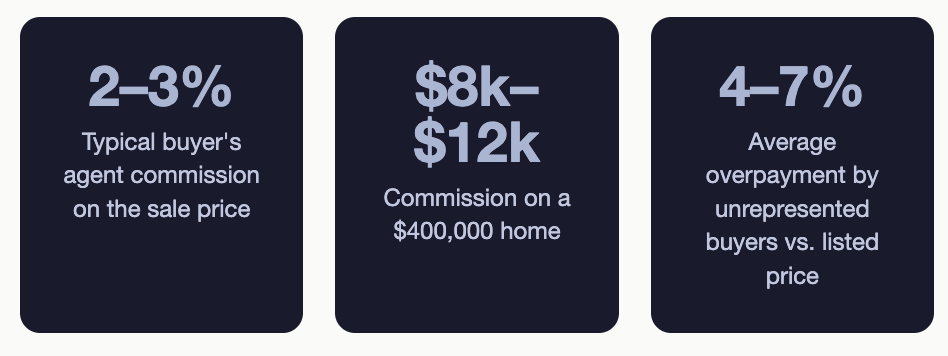
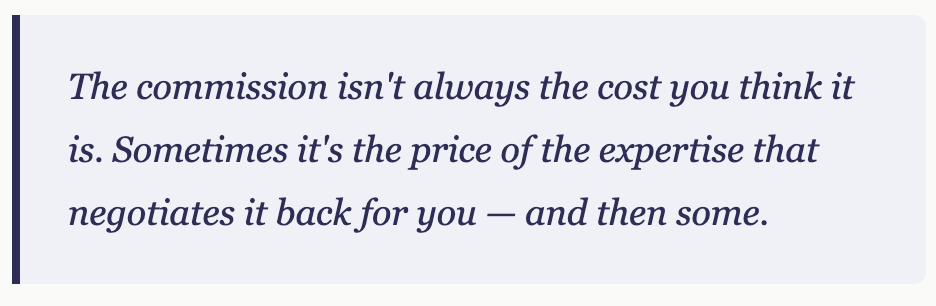
Here's the complication: many sellers build a buyer's agent concession into their pricing and negotiating expectations. When you come in unrepresented, sellers don't automatically drop their price by 2–3% to reflect the savings — they simply keep it. You've saved on the commission but surrendered the negotiating expertise, and most unrepresented buyers end up paying closer to asking price than represented buyers do.
There's also the concession trap. A seller offering a 2.5% buyer agent credit as part of their listing terms is essentially inviting you to claim it toward closing costs or a rate buydown. Many unrepresented buyers don't know to ask for it, and it disappears into the seller's bottom line.
When going without an agent actually makes sense
There are legitimate situations where skipping a buyer's agent is a reasonable choice.
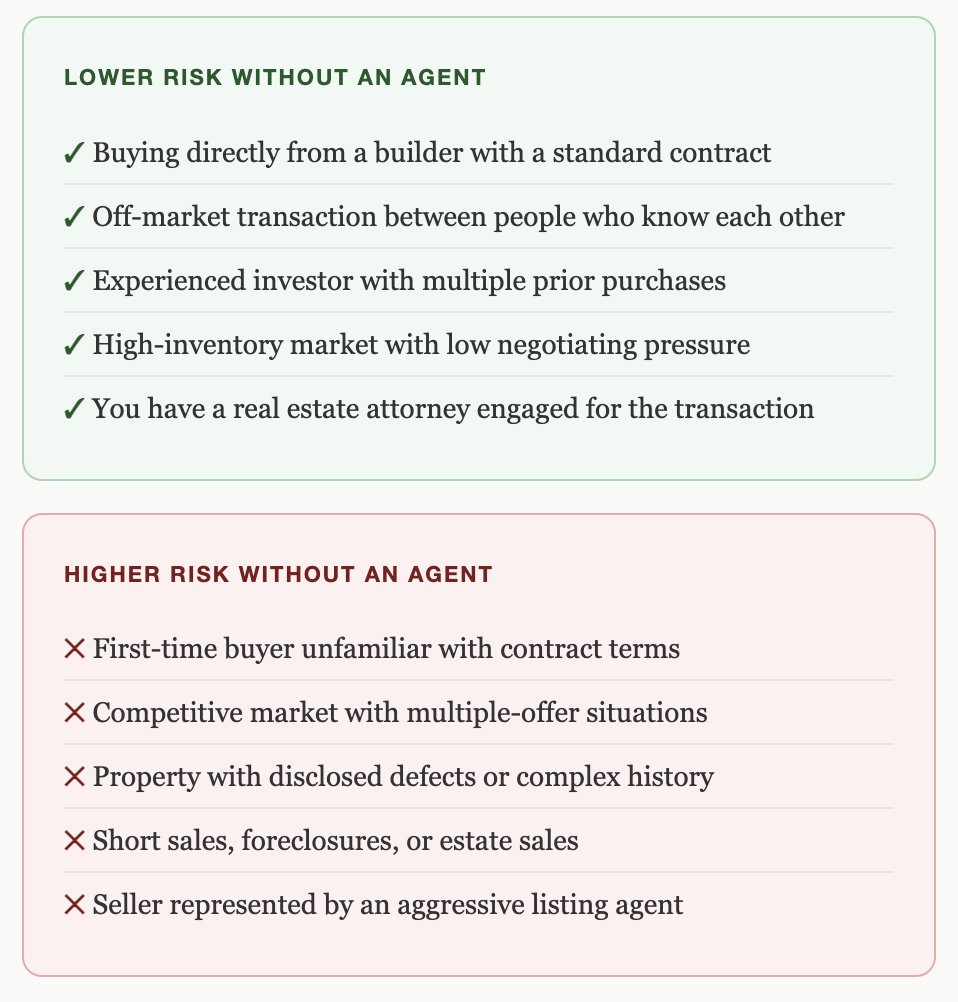
Buying directly from a builder is probably the most defensible unrepresented scenario — but even here, the builder's sales agent represents the builder, not you, and new construction contracts are written heavily in the builder's favor. Having an independent attorney review the contract before you sign costs far less than the surprises it prevents.
The middle-ground options most buyers don't know exist
The choice isn't binary. Between full buyer representation and going completely solo, there are several options that give you professional support at a fraction of the cost — or free.
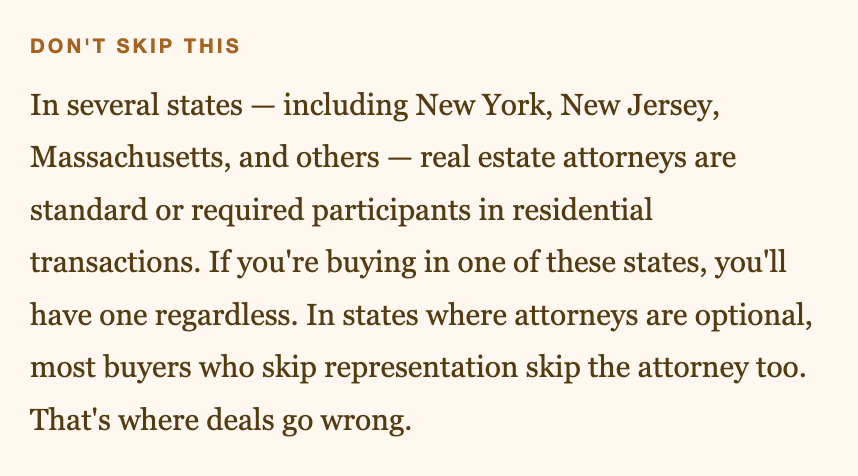
Required at closing in some states; optional but powerful in others. A real estate attorney reviews contracts, identifies unfavorable terms, and can flag disclosure issues. Hourly rates typically run $200–$400. For most transactions, a few hours of attorney review is money extremely well spent.

Tom Taranto
Operator | Realtor® | Market Specialist | Taranto Team | Keller Williams Realty Brevard | PLACE
or another way